Category: All
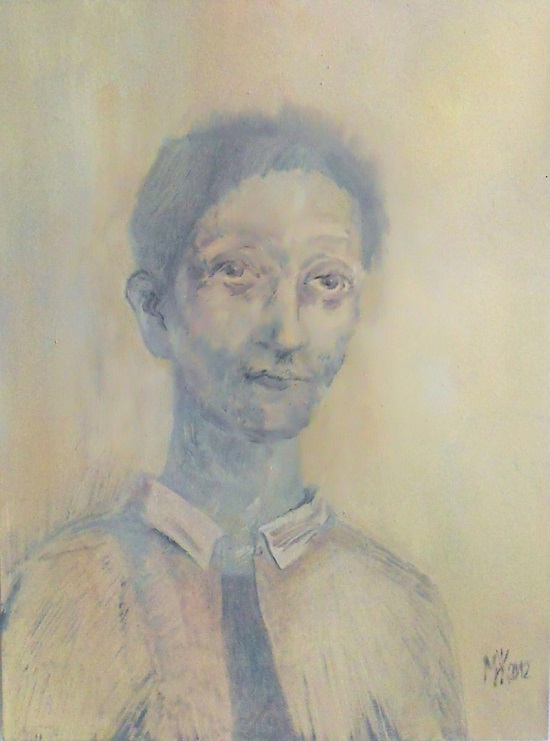
The ‘Face Study’ series of 7 oil paintings came to life during 2011-2012, when I was able to approach the subject I’ve kept close to my heart for a while. For this series of portraiture images I selected 7 vulnerable characters that can be found in the margins of a society, and wouldn’t often be the subject of traditional portraiture. As a painter I have experienced a particular interest and sympathy for certain ‘out of the ordinary’ personalities, such as drunkards, the homeless, the vulnerable, ‘mad’ people and victims of abuse. I always wanted to paint them. I’m intrigued by the controversy in the nature of my characters.
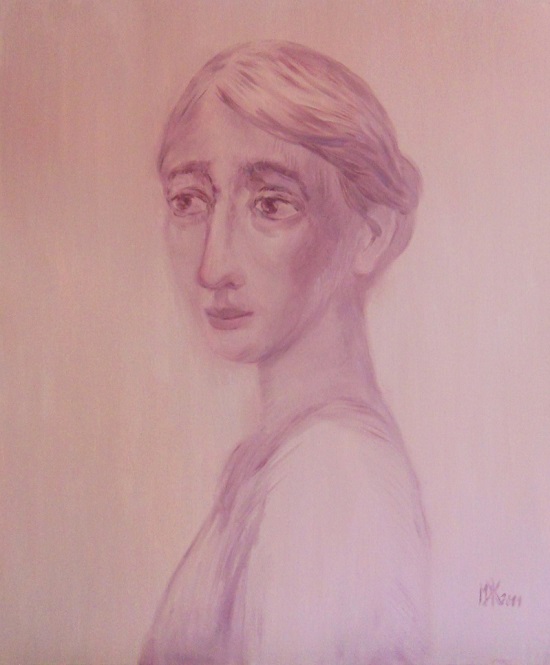
While most of them have had tough lives and disadvantaged upbringings, their faces preserved child-like curiosity directed to the world and express a kind of content. For me the people I portray are attractive because of the raw quality, lack of pretence and polish on their faces.
The portraits were painted from imagination. I usually ‘collect’ impressions of people in my memory, and sometimes sketch them before painting.I would do a sketch to select a character from a number of memorable impressions, and then paint directly on canvas, without preliminary drawing.
See more portraits by Marina Jijina
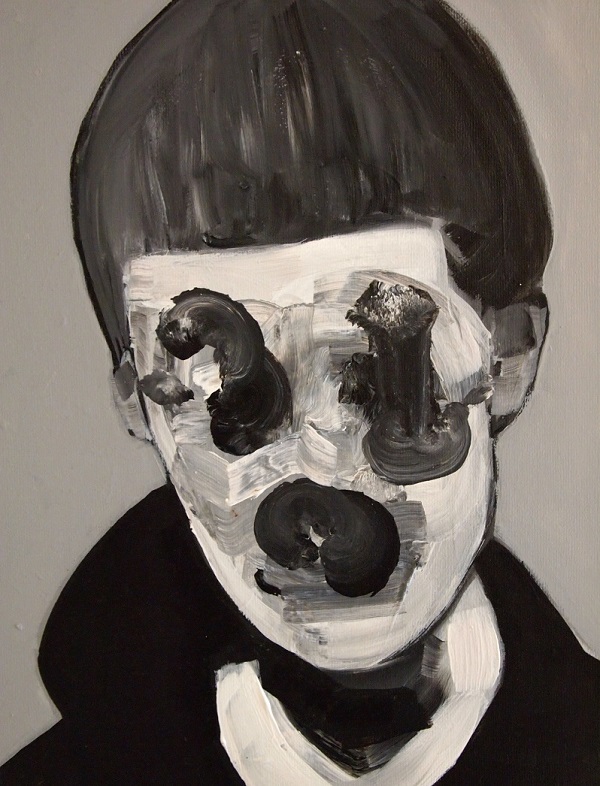 Miguel was born in southern Spain and has been living in London since 2001, when he came here to complete a degree at Central St Martins College.
How did growing up in Spain affect how you paint now that you live in London?
I grew up in a very small town in Andalucia, steeped in a mixture of Roman Catholic mythology and local folklore and superstition. But I always felt like an outsider and was instinctively drawn to urban culture through American and British music, cinema and fashion. I suppose there is some reference to the austerity of the Spanish masters in my work, and the muted, earthy palate of the Andalucian countryside. Continue reading “Q&A with Miguel Laino”
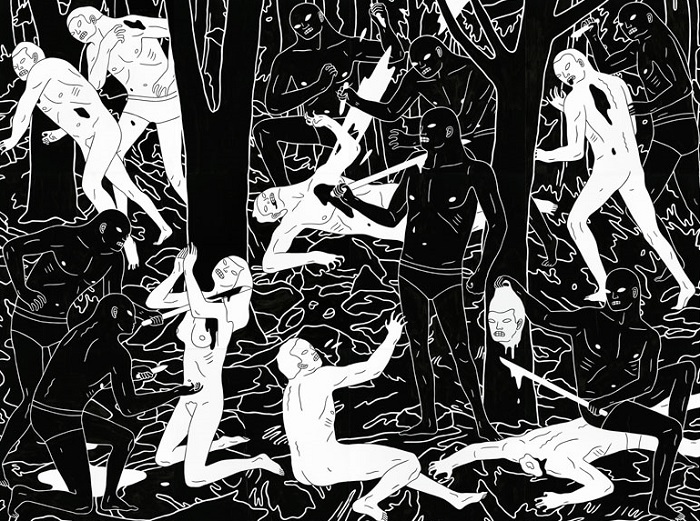
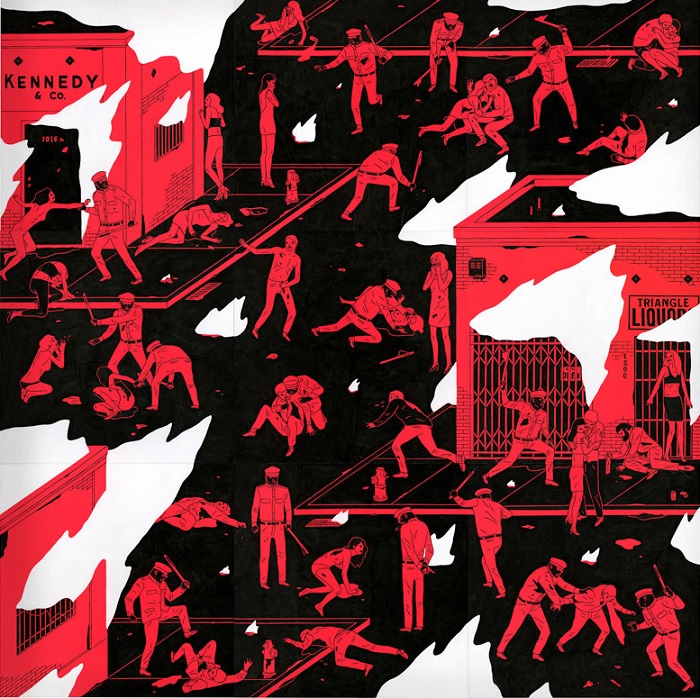
5th July – 3rd August 2013
Cleon Peterson’s nightmarish tableaux feature scenes of a barbaric holocaust, where might is right and the weak are merely souls with holes for the strong to torment and abuse. Deviance is the norm, and the displaced individual is forced to navigate this wicked world alone, finding hollow bits of pleasure and meaning in violence, sex, religion and drugs
Cleon says ‘My work doesn’t just contain violence, there’s a humour to it – the images are so over the top.’ A horde of uniform bad guys, at once ethnic, gothic and alien rampage through the works, sacking small the metropolis within and wantonly abusing its law-abiding residents. These bogeymen are so comically stereotyped as to infer that oppressors take many forms, throughout history to the present day, from slavers and plutocrats to bullies and witch-hunters.
For more, info please visit The Ousiders.
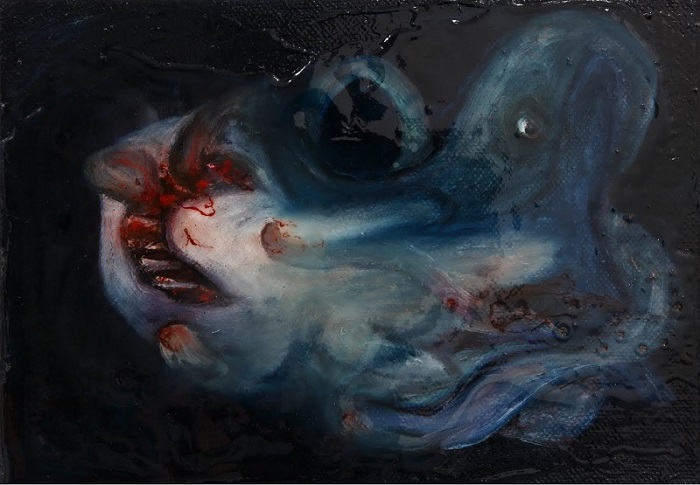
This image came to me whilst musing on the incredible tale of a sperm whale being found, miles down at the bottom of the sea, in a deathly clinch with a giant squid. Each animal had tried to devour the other, but in so doing both had died and had remained in a post mortem embrace.
On further reflection I realised that this scene was a powerful metaphor for certain human relationships: the desire to devour, to fight, to cling, to flee from – all impulses being felt simultaneously, but resulting in a kind of emotional deadlock in which true movement is impossible. The image became more potent for me when I substituted a shark for the whale and an octopus for the giant squid – the ruthless, predatory, fast-moving agility of the shark, and the slower, softer and more intelligent (yet potentially more ‘devouring’) nature of the octopus (the eight tentacles being a difficult trap to escape from).
I have also come to think that the attributes of these two animals could also be seen as two aspects of the psyche that are at war with each other. The event is clothed in the darkness of the depths of the ocean, symbolising the unconscious or barely conscious nature of the struggle. The danger is that neither combatant will survive – they will either kill each other, or they will ‘drown’.
I have used layers of clear varnish as glazes over the whole scene – I wanted it to feel slightly distanced from the viewer, and to allow the red ink to leach out, like blood in water.
The thickening varnish also acts to set the scene ‘in aspic’ – as if it is a fixed but eternal struggle – a struggle with no certain outcome, but potentially fatal to both.
See more paintings from Michael Hayter
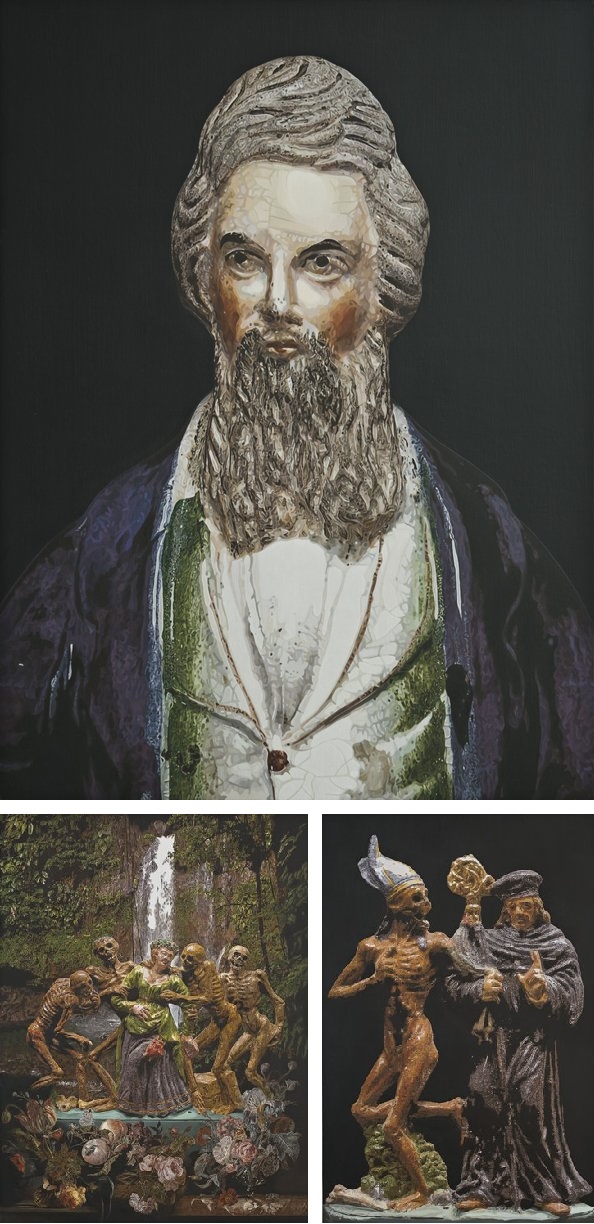
5 July – 3 August 2013
British artist Mathew Weir will be showing nine new paintings at the Alison Jacques gallery. In these works Weir continues to fuse imagery of ceramic figurines with his archive of landscapes to create complex narratives with exquisite yet melancholic auras. By dislocating and re-presenting historic objects such as early 19th Century German terracottas or Victorian ceramics in uncanny contexts, Weir entreats the viewer to reconsider how our interpretations of their original representations have been transposed over time and to actively address notions of racism, oppression, violence and death.
4th July – 3rd August 2013
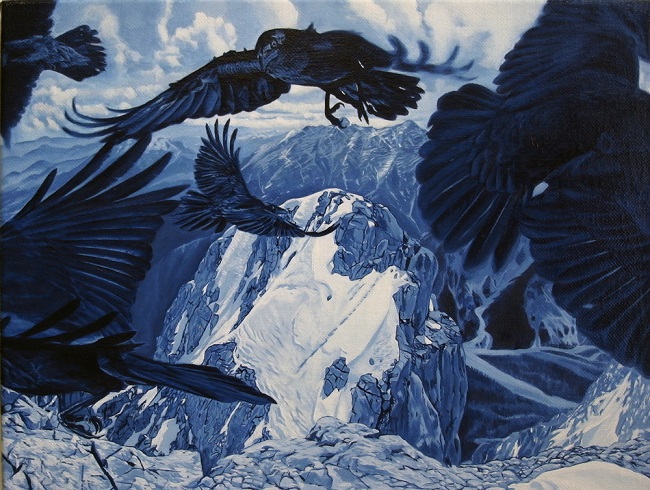
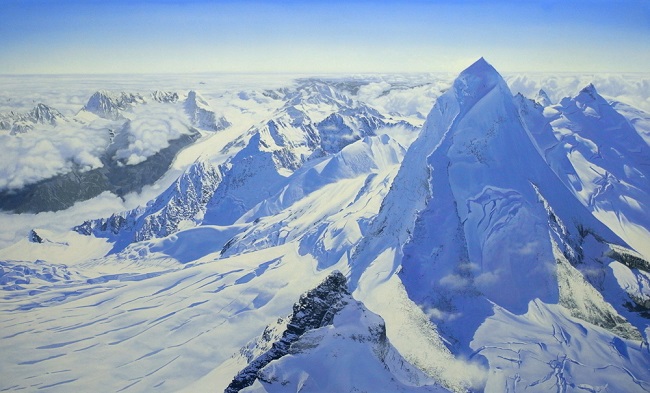
The natural world a fast escaping thing. Urbanisation, digitisation… every step into invention takes us that bit further away from our roots. And yet we can’t do without it. Nature still retains a strong hold over us – physically, emotionally, and in our imagination. 60% Water brings together three English painters who each explore this in a different way: Sarah Harvey, Jon Braley & Alexander Heaton.
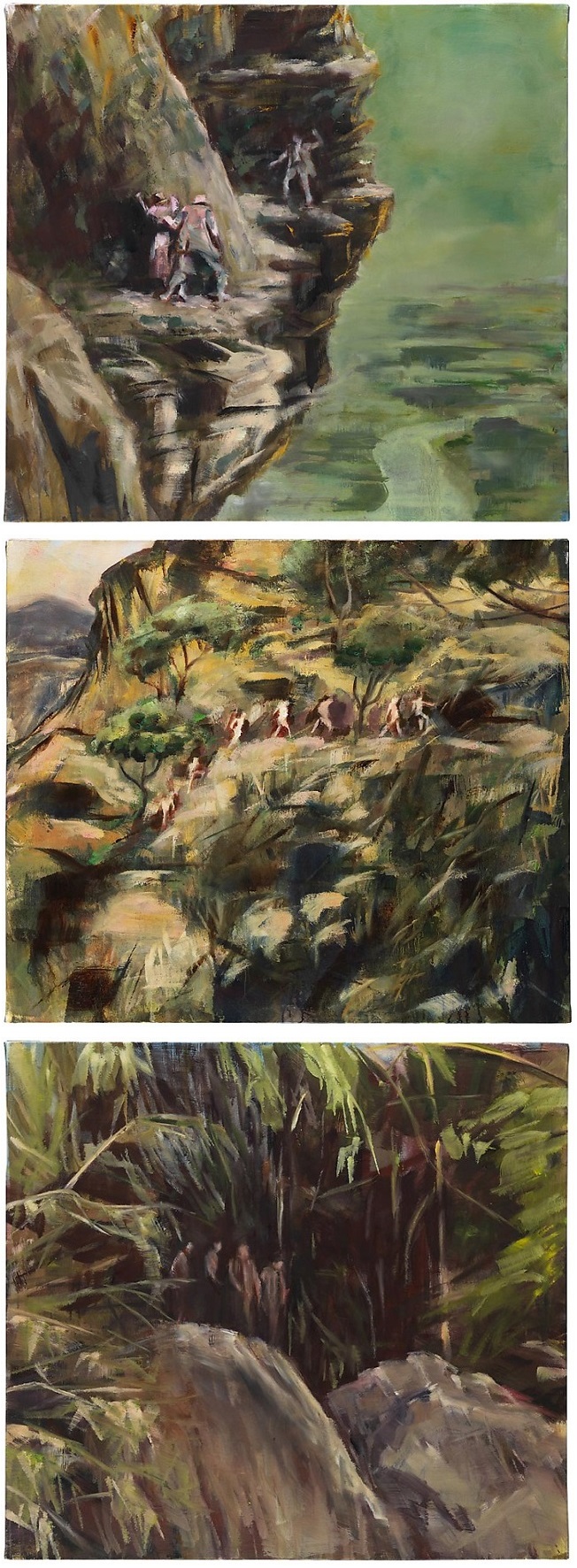
Alexander Heaton’s paintings are based on his experiences as a mountain climber, travelling to some of the most remote and unvisited places on the planet. His work starts with almost photographic depictions of hard-to-reach places, and then ventures into the mythical associations that have grown up around them. Partly a matter of the sublime, Alex’s work is also about the point where, by leaving civilisation behind, the imagination starts to take charge, delving deep into the subconscious of old myth and folklore to animate the natural world with stories and spiritualism.
For more info, please visit the James Freeman Gallery.
2nd July – 7th July 2013
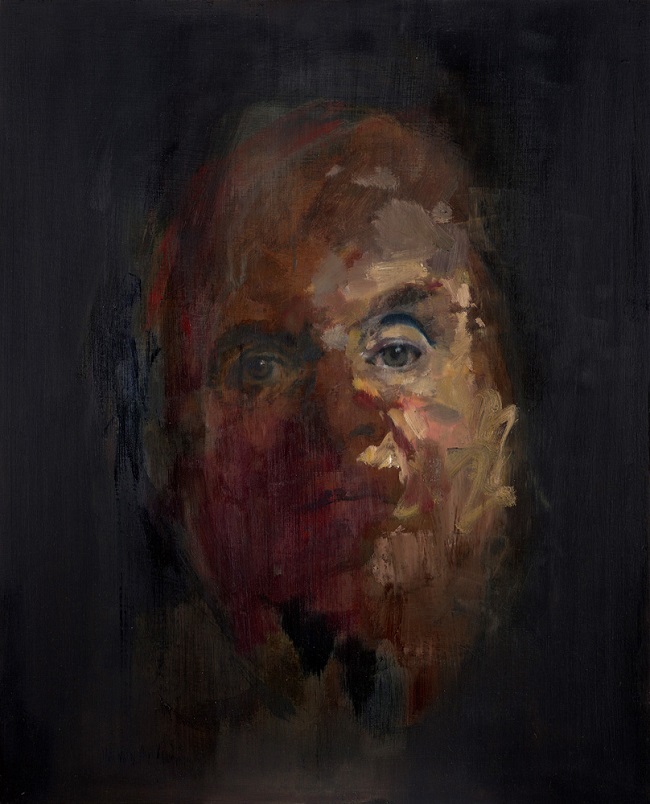
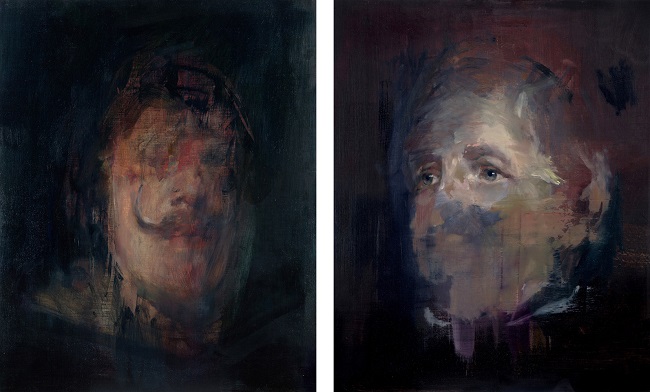
Award winning artists Jake Wood-Evans and Chris Kettle bring new work to London at the Gallery in Redchurch Street (Shoreditch). The exhibition celebrates a return to classical craft and aesthetic mastery: these award-winning artists dare to be traditional even as they engage the modern subject. Haunted by specters both of the artistic past and their personal histories, these artists’ vivid, somber and beautiful paintings explore light, solitude and the many senses of darkness to startling and moving effect.
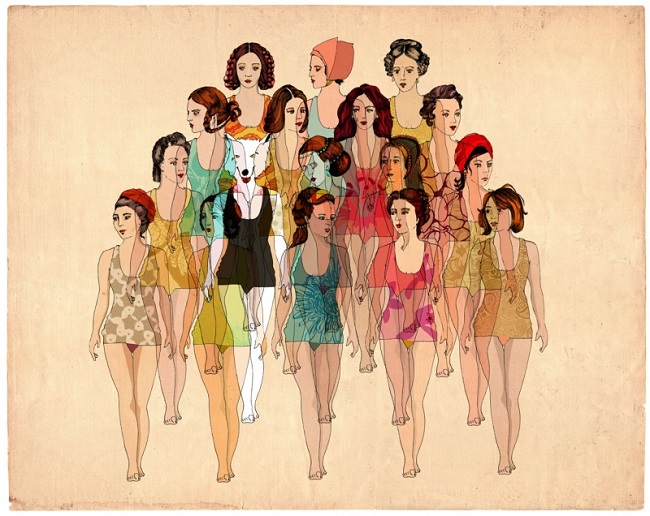
I created the first version of ‘Photo de Classe’ in 2006. Repetition and broken patterns are themes I have explored many times since. In these images, the women have the same cut and pasted bodies, and only their heads differ. The she-wolf is the odd element. I like to let people interpret the meaning of the wolf freely.
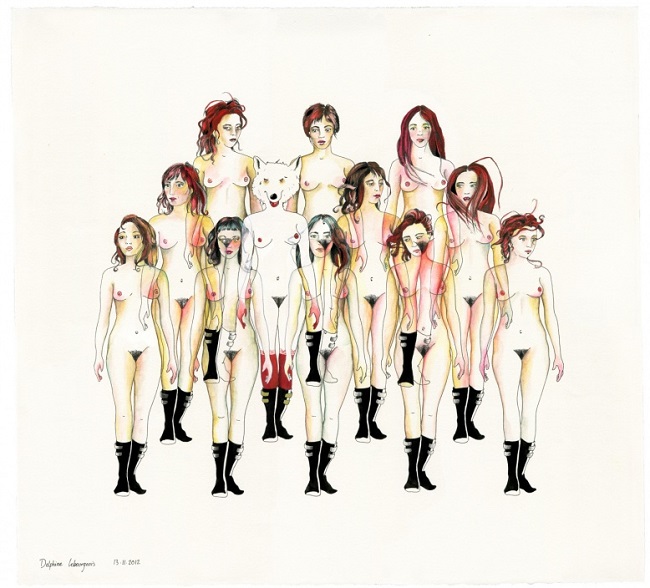
A man once told me that the wolf was the woman you fell in love with. The only one who looks at you straight in the eye, and the one you should be wary of. For me, the wolf represents competition amongst women.
See more drawings by Delphine Lebourgeois
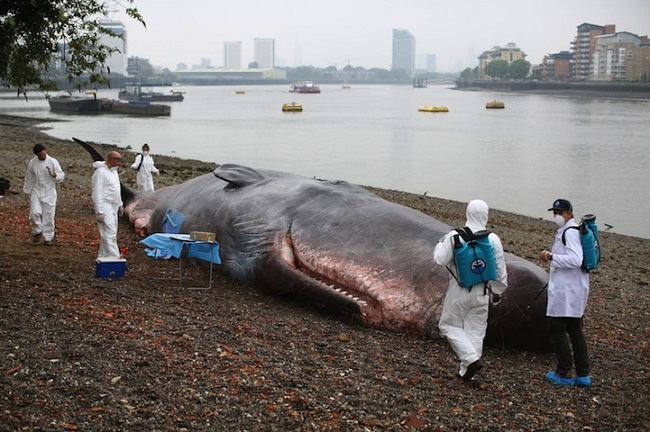
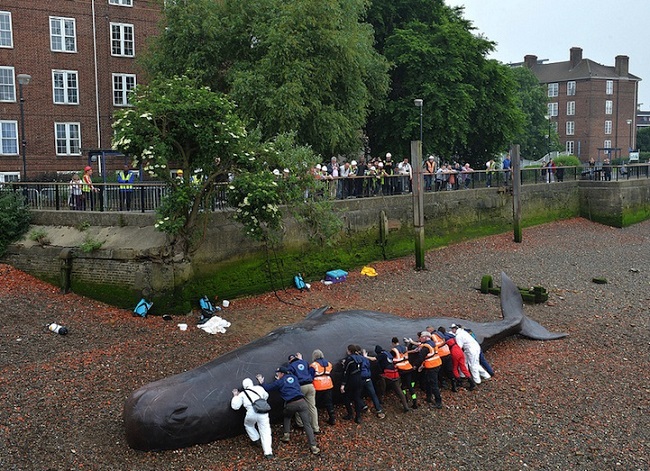
The Belgian collective known as Captain Boomer in conjunction with Greenwich + Docklands International Festival have created a 17-meter long fiberglass whale and beached on the banks of the river Thames. A cast of performers, acting like scientists, investigated the site as an actual team from the British Divers Marine Association, were on hand to answer any questions about what would happen if the whale was real.
Captain Boomer states, “The psychological archetype of the dead big fish leaves no one untouched. It stirs and mobilizes a local community. During our beachings, we see an intensive interaction among the crowd. People address each other, speculate and wonder. They offer help and ask for information. The different layers of perception create funny games. Some audience members know it is a work of art but feed the illusion to other people. The sperm whale appeals to everyone, regardless of social or cultural background. It is the place where everyone gets together. That’s why it is vital it beaches on a public spot that is freely accessible.”